
Peer review process
Revised: This Reviewed Preprint has been revised by the authors in response to the previous round of peer review; the eLife assessment and the public reviews have been updated where necessary by the editors and peer reviewers.
Read more about eLife’s peer review process.Editors
- Reviewing EditorSaad JbabdiUniversity of Oxford, Oxford, United Kingdom
- Senior EditorYanchao BiPeking University, Beijing, China
Reviewer #1 (Public review):
[Editors' note: this version has been assessed by the Reviewing Editor without further input from the original reviewers. The authors have addressed the comments raised in the previous round of review.]
Summary:
There is prior literature showing a robust relationship between sulcal interruptions in the posterior occipital temporal sulcus (pOTS) and reading ability. The goals of this study were to extend these findings to children examined longitudinally as they become better readers, and to examine the underlying white matter properties in individuals with and without pOTS sulcal interruptions. To do this, the authors collected longitudinal structural, diffusion, and behavioral data in 51 children (TP1 age 5.5, TP3 age 8.2 years).
First, the authors found that the gyral gap was consistent across time within the subject. This is expected, as they state in the introduction that sulcal patterns are typically established in utero. Next, they found that children with an interrupted pOTS have higher reading scores (across a variety of measures) at timepoint (TP) 3 than children with continuous pOTS, and this was specific to the pOTS, as no associations emerged for the anterior OTS or MFS; this is again expected from prior literature. They then found that the binary presence of this gap, but not anterior OTS or MFS predicted T3 reading performance. Further, they found that a subsample of the lowest readers at TP1 did not have differences in reading score by gyral gap, but that this difference emerged at TP3. Additionally, the gyral gap at TP1 is similar to variance TOWRE 3 reading skills as some behavioral measures at TP1. Examining underlying white matter in a smaller subset of children, the authors found higher MD in children with an interrupted pOTS vs. those with a continuous pOTS, which was contrary to their hypothesis, and higher local connectivity for interrupted, aligning with their hypothesis, but this difference was no longer present when accounting for TP3 reading scores. The authors conclude that structural properties, in this case, the gyral gap, may guide neural plasticity for reading.
Strengths:
This paper has an interesting set of longitudinal data to examine the perhaps changing relationship between sulcal interruptions in the pOTS with reading scores. I commend the authors on data collection and attention to detail in the anatomical analyses.
Reviewer #2 (Public review):
Summary:
This manuscript examined the impact of sulcal morphology on reading development. A very specific feature on the ventral surface of the brain was identified, namely the presence of an interruption in the posterior portion of the left occipitotemporal sulcus (pOTS). Compared to children with a continuous pOTS, children with an interruption at age 5 years had better reading ability at age 8. This was a large effect measured in 43 children. Surprisingly, this morphological feature was a better predictor of reading ability than measures of pre-literacy cognitive skills, such as phonological awareness. The effect was tested and reproduced across several different measures of reading ability. The authors hypothesised that the mechanism underlying this benefit related to greater local connectivity, which confers a computational advantage. This was demonstrated using analysis of diffusion-weighted imaging data in 29 of the children obtained at age 8.
Strengths:
The novelty of the manuscript is threefold: (i) the measure was made in children who were pre-literate (previous work was in older children and adults); (ii) longitudinal brain imaging and behavioural data were analysed; and (iii) diffusion data were analysed to test a hypothesis about the underlying mechanism.
The manuscript is exceptionally well written. The methods are detailed and easily reproduced. The approach is thoughtful and meticulous. All possible alternatives appear to have been considered. Where possible, further analyses have been done to address these alternatives. For example, the testing of the specificity of the sulcal interruption to left pOTS was an important addition. None predicted reading skills.
Author response:
The following is the authors’ response to the original reviews.
Public Reviews:
Reviewer #1 (Public review):
Summary:
There is prior literature showing a robust relationship between sulcal interruptions in the posterior occipital temporal sulcus (pOTS) and reading ability. The goals of this study were to extend these findings to children examined longitudinally as they become better readers, and to examine the underlying white matter properties in individuals with and without pOTS sulcal interruptions. To do this, the authors collected longitudinal structural, diffusion, and behavioral data in 51 children (TP1 age 5.5, TP3 age 8.2 years).
First, the authors found that the gyral gap was consistent across time within the subject. This is expected, as they state in the introduction that sulcal patterns are typically established in utero. Next, they found that children with an interrupted pOTS have higher reading scores (across a variety of measures) at timepoint (TP) 3 than children with continuous pOTS, and this was specific to the pOTS, as no associations emerged for the anterior OTS or MFS; this is again expected from prior literature. They then found that the binary presence of this gap, but not anterior OTS or MFS predicted T3 reading performance. Further, they found that a subsample of the lowest readers at TP1 did not have differences in reading score by gyral gap, but that this difference emerged at TP3. Additionally, the gyral gap at TP1 is similar to variance TOWRE 3 reading skills as some behavioral measures at TP1. Examining underlying white matter in a smaller subset of children, the authors found higher MD in children with an interrupted pOTS vs. those with a continuous pOTS, which was contrary to their hypothesis, and higher local connectivity for interrupted, aligning with their hypothesis, but this difference was no longer present when accounting for TP3 reading scores. The authors conclude that structural properties, in this case, the gyral gap, may guide neural plasticity for reading.
Strengths:
This paper has an interesting set of longitudinal data to examine the perhaps changing relationship between sulcal interruptions in the pOTS with reading scores. I commend the authors on data collection and attention to detail in the anatomical analyses.
Weaknesses:
However, my enthusiasm was somewhat dampened after finding numerous prior publications on this very topic and I'm unclear as to how much more this paper adds to the current literature. Would we expect the existence of sulcal interruptions to be aligned with reading skills in older kids but not younger kids? Is the point to see if the interruptions exist prior to reading (but these children are not really prereaders)? What is the alternative- why would these interruptions not exist? After all, this anatomy is determined prenatally. Children who have pOTS interruptions at T1 should also have these interruptions at T3 (and indeed that is what the authors find). So how can this be the mechanism that drives plasticity? The authors also talk about the neuronal recycling hypothesis but their data cannot speak to this because they do not have fMRI data nor does their sample include only prereaders with no reading experience. The conclusions are overall overstated and not supported by the results. I think this paper could add interesting knowledge for the specific subfield of reading and the brain. However, the current state of the results, especially with the inclusion of so many trending results and the comparison of so many different processing pipelines and models, in addition to a conclusion that is not motivated by the work makes it difficult to appreciate the paper.
We thank Reviewer 1 for their detailed feedback. The reviewer raises several related concerns regarding the novelty and framing of the study, the interpretation of stable sulcal anatomy, early reading abilities, statistical robustness, and the proposed link between pOTS morphology, white matter, and reading development. In response, we have revised the manuscript to make clearer that the main contribution is not the stability of pOTS morphology itself, nor simply the replication of previously reported cross-sectional associations with reading, but rather how this stable anatomical feature relates prospectively to reading acquisition from the onset of literacy instruction. In particular, we now make more explicit that left pOTS interruption contributes to later reading beyond associations already present at age 5, including through an updated serial mediation analysis, and we better highlight how this relationship develops over time.
The reviewer’s comments also prompted us to explain more clearly how the complementary analyses in the full sample and in the subgroup with very limited initial reading skills converge to support our conclusion that left pOTS interruption is a particularly strong longitudinal predictor of later reading relative to the benchmark behavioral and familial predictors considered, despite the collinearity between pOTS interruption and emerging literacy skills at T1. We have renamed this subgroup more accurately from “pre-readers” to “initial minimal readers” and clarified its characteristics and range of reading abilities.
We also moved key analyses from the Supplement to Figure 3 to make the distinction between separate and unique longitudinal contributions easier to follow. The initial-minimal-reader analyses provide a complementary assessment in which confounding with early reading is substantially reduced. At the same time, as the reviewer accurately pointed out, some of our previous wording implied a more categorical superiority than the analyses warrant; we have therefore softened these claims throughout the manuscript while preserving the conclusion that pOTS interruption is among the strongest longitudinal contributors considered. We also added, in response to Reviewer 2, a new systematic analysis supporting the relative cognitive specificity of the pOTS effect.
Finally, we made several interpretations more precise, notably by presenting the white-matter findings as a candidate pathway rather than a definitive mechanism and by removing implications that our data directly test the neuronal recycling hypothesis. We believe these revisions make the longitudinal contribution, scope, and significance of the findings considerably clearer, and we are grateful to the reviewer for prompting these improvements.
Reviewer #2 (Public review):
Summary:
This manuscript examined the impact of sulcal morphology on reading development. A very specific feature on the ventral surface of the brain was identified, namely the presence of an interruption in the posterior portion of the left occipitotemporal sulcus (pOTS). Compared to children with a continuous pOTS, children with an interruption at age 5 years had better reading ability at age 8. This was a large effect measured in 43 children. Surprisingly, this morphological feature was a better predictor of reading ability than measures of pre-literacy cognitive skills, such as phonological awareness. The effect was tested and reproduced across several different measures of reading ability. The authors hypothesised that the mechanism underlying this benefit related to greater local connectivity, which confers a computational advantage. This was demonstrated using analysis of diffusion-weighted imaging data in 29 of the children obtained at age 8.
Strengths:
The novelty of the manuscript is threefold: (i) the measure was made in children who were pre-literate (previous work was in older children and adults); (ii) longitudinal brain imaging and behavioural data were analysed; and (iii) diffusion data were analysed to test a hypothesis about the underlying mechanism.
The manuscript is exceptionally well written. The methods are detailed and easily reproduced. The approach is thoughtful and meticulous. All possible alternatives appear to have been considered. Where possible, further analyses have been done to address these alternatives. For example, the testing of the specificity of the sulcal interruption to left pOTS was an important addition. None predicted reading skills.
Weaknesses:
The correlation of the interruption with all kinds of literacy measures and in particular reading comprehension and then PIQ suggest this interruption might confer a more general cognitive advantage rather than specifically a reading one.
It would be interesting to know if the anatomical difference predicts any other cognitive ability or if there might be any cognitive cost (a negative correlation) of this sulcal interruption.
The location of the interruption in the sulcus is quite variable and in some cases, there is more than one interruption. The sample size is probably not big enough to compare these different patterns or to evaluate the influence of the location of the sulcal interruption.
The sample is quite high-functioning and the generalisability of the findings outside of this specific population is inevitably limited.
We would like to thank Reviewer 2 for their positive feedback and for their insightful suggestions.
Cognitive specificity: We agree with the reviewer that the association between left pOTS interruption and performance IQ, as measured in the concept formation learning task, on top of its association with multiple measures of literacy, raises the possibility that this sulcal feature relates to general cognition more broadly. The fact that reading and general cognitive abilities are highly correlated and mutually influence one another over development complicates any attempt to interpret the effect of left pOTS interruption as purely reading-specific. Our results however support a relative specificity of this sulcal feature to reading: left pOTS interruption remains a strong longitudinal predictor of later reading, even when controlling for the moderate association with performance IQ, and its impact on reading skills is larger than on pIQ. Importantly, a new systematic analysis of associations with all the cognitive and academic skills obtained at T3 further supports a relative cognitive specificity to reading: We show that while left pOTS interruption is also significantly associated with several assessments of math, language and general cognition at age 8 (possibly due to the inherent correlations across these domains), hierarchical clustering indicates that pOTS interruption aligns most closely with literacy-related outcomes (cf. See rev 2 recommendation comment (1)). We observe no cognitive costs of left pOTS interruption across the many linguistic, pre-literacy and cognitive domains tested.
Neuroanatomical precision: We also fully agree that our sulcal marker of interest, i.e., whether the posterior portion of the left pOTS is interrupted or not, is relatively coarse and may lack in neuroanatomical precision (though this robustness may alternatively be seen as a strength). Beyond this first approximation, several questions remain unanswered, including whether additional interruptions confer an additional reading advantage, or whether interruptions in more specific locations of the left posterior OTS would be optimal. Unfortunately, multiple interruptions were too rare and gap locations too unevenly distributed in our cohort to support adequately powered comparisons. These questions can only be answered on larger sample sizes, which we now mention in our revised Discussion. Please refer to See rev 2 recommendation comment (3) for more details and for the results of tentative explorations which did not support clear trends.
Sample limitations: The characteristics of our sample (being both from a high socio-economic background, as often seen in pediatric research, and high-functioning) indeed limit the generalizability of our results, as we now acknowledge in the Discussion. However, we replicate results by Cachia and colleagues (2018) which were obtained in a sample where half of the participants were from a rural and (very) low socio-economic background, in order to match a sample of illiterate adults, and this association has been now found in multiple samples with various SES and cognitive characteristics. This suggests that overall such associations may be generalizable across extremely varied socio-economic backgrounds and also possibly along the spectrum of general cognitive skills (cf. R2 comment-toaddress #5).
Additional correction made during revision:
During the revision process, we identified one subject for whom an anterior OTS gap had been incorrectly included in the diffusion analyses (participant 6007 on previous Supplementary Figure S6). We removed this gap, reran all diffusion analyses, and updated the relevant results and figures. The results and conclusions remained essentially unchanged.
Recommendations for the authors:
Reviewer #1 (Recommendations for the authors):
Comment (1) The results are currently framed in a manner that makes it difficult to figure out what the main findings of the paper are, and to see if those findings support their conclusions.
The beginning of the results is focused on showing that the longitudinal pipeline has a better consistency across time points, yet the authors still report follow-up analyses with the cross-sectional pipeline, even though those results are only trending. I think it would make more sense to only focus on the longitudinal pipeline because that is the novelty of this manuscript.
We fully agree with Reviewer 1 that the longitudinal pipeline shows better consistency and likely constitutes a more accurate, less noisy measure of sulcal interruptions, as we report. For this reason, all the results reported in the main figures concern the longitudinally processed data only.
Yet, we choose to also include and report supplementary cross-sectional analyses since these analyses, while less reliable, are important for several conceptual reasons:
(1) Since we wanted to demonstrate that T1 brain anatomy predicted T3 behavior longitudinally, it seemed important as a proof of principle to show that this prediction held with T3 brain data completely unseen, i.e., with T1 cross-sectional processing only. We have now clarified the text referring to this analysis (lines 192-196):
“This importantly implies that left pOTS morphology at T1 was still a significant longitudinal predictor of T3 reading behavior when T3 brain images were not used to improve T1 anatomical segmentations, i.e., with T1 cross-sectional processing alone, despite noisier tissue segmentations with cross-sectional processing (see also Reuter et al., 2012).”
(2) Since most studies are cross-sectional, reporting cross-sectional effects may constitute a more relevant reference for other studies, and for the generalizability of our results.
(3) Larger samples were available for the cross-sectional processing, allowing to test a maximum number of children, despite the higher noise in the sulcal measurements.
Please also note that across the 4 types of processing (2 timepoints x cross-sectional & longitudinal pipelines), only pOTS interruptions measured cross-sectionally at T3 showed a marginal association with reading scores, while the other 3 processings showed a large significant effect. Having established that cross-sectional measures are less reliable, and since our main goal was to demonstrate that T1 morphology predicted T3 reading, such trending results are found in the least reliable and least relevant condition, with otherwise large and significant effects, which seems quite acceptable. If anything, we believe that transparently reporting these consistent results altogether support, rather than challenge, the robustness of the association.
Our main findings are summarized in the last paragraph of the Introduction as well as in the first paragraph of our Discussion.
Comment (2) Also, as the authors note, it is known that sulcal patterns develop in utero; therefore, we would expect a perfect alignment between TP1 and TP3- there should be a more in-depth analysis of the lack of alignment in the main results. And further, this is more reason that the results should focus on the longitudinal pipeline which is closer to that expectation. However, it is unclear whether T1 data processed through the longitudinal pipeline preserves anatomical nuances of that time point (since the images are averaged across the timepoints). Maybe the cross-sectional pipeline is a better depiction of how anatomy changes as a child develops.
We thank Reviewer 1 for raising these relevant questions.
First, we would like to clarify that T1 longitudinal processing does preserve anatomical nuances of this time point. In fact, the averaging of T1 and T3 MRIs into a subject base is only an intermediate step of the longitudinal pipeline, which then crucially allows to re-initialize T1 MRI and T3 MRI tissue segmentations separately from their respective scans, but using this time the common tissue priors provided by the subject base (hence the reference to distinct “T1 longitudinal” and “T3 longitudinal” processing). We describe this in the Methods (lines 764-769):
“When images were available at both Time 1 and Time 3 for a child (N=43), the longitudinal Freesurfer pipeline was used, which first creates an unbiased subject average across time points (“base”) and then restarts multiple processing steps at each time point separately from the base template in order to refine tissue segmentations on each image (respectively T1 and T3 longitudinally processed images, Reuter et al., 2012; see Figure 1A).”
Therefore, a perfect match between T1 and T3 anatomy is not expected, even if we could expect (and indeed find) pOTS morphology, and interruption patterns in particular, to be extremely stable. Actually, our left pOTS interruption classification only changes between the T1 and T3 longitudinal processing for one child, with two left pOTS sulcal components separated by a distance estimated as 1.34mm at T1 and 0.99mm at T3, leading to a different classification given our 1 mm minimum-distance interruption criterion. We added the following sentence accordingly (lines 146-149):
“Only one child changed left pOTS interruption classification between T1 and T3 under longitudinal processing, due to the measured inter-component distance crossing the predefined 1-mm threshold, consistent with high stability of this macro-anatomical feature.”
Our results are therefore consistent with the view that sulcal interruption patterns are set in utero and stable after birth. Given that there actually is limited direct evidence to this effect, we chose to confirm this stability as a first step, which we refer to in the Discussion (lines 606-610):
“In our study, we observed high reliability of the pOTS interruption from age 5 (T1) to age 8 (T3), which is consistent with the longitudinal stability of interruptions of (i) the intraparietal sulcus and postcentral sulcus (Schwizer Ashkenazi et al., 2024), (ii) sulci in inferior frontal cortex (Tissier et al., 2018), and (iii) patterns of the anterior cingulate sulcus (Cachia et al., 2016) observed in late childhood (approximately 8 years onwards) to early adulthood.”
As discussed above, the longitudinal processing pipeline leads to better precision in assessing neuroanatomy, as well as its change across time (see the seminal paper by Reuter et al., 2012), which is why we mostly use measures derived from the longitudinal processing.
Comment (3) The analyses starting on p.4 ("Left pOTS interruption is prospectively associated with better reading skills") seem overly fixated on cross-sectional vs. longitudinal processing pipelines. The key comparisons should be on anatomical specificity (posterior or anterior OTS, etc) as well as including T1 reading skills as a regressor to see if the interruptions at T1 explain additional variance in T3 skills.
We thank Reviewer 1 for highlighting that we had started our result paragraph by a verification that was less essential. We have now reordered our results to highlight those concerning the anatomical specificity to the left pOTS, in the analyses reported under “The association between left pOTS interruption and reading skills was robust to different measurements of reading skills and sulcal interruption in four ways” (line 175 onward).
Testing whether the interruptions at T1 explain additional variance in T3 skills over and above T1 reading skills is so essential that it is actually the object of the entire next subsection “The effect of left pOTS interruption on reading accumulates over time” (lines 235-274). This claim is supported by the following findings:
(1) In the subsample of minimal readers with little to no reading experience at T1, we see that despite the absence of associations between left pOTS interruptions and reading at T1, the association is present and significant at T2 and T3 and appears to grow (lines 243-253 and Supplementary Figure 4);
(2) In the serial mediation analysis across the whole sample that follows, we observe important and significant additional contributions of left pOTS on later reading skills beyond the contributions at T1. We have now clarified this essential point and rephrased these results, notably adding this particular sentence:
“Importantly, there were also significant contributions of left pOTS interruption onto T3 reading on top of those mediated through T1, with large cumulative effects through T2 and directly onto T3 (d*c+f: ꞵ = 4.580, SE = 1.757, p = .009), while indirect effect through T1 TOWRE scores alone were non-significant (a*b*c+a*e: ꞵ = 0.971, SE = 0.839, p = .25).” '
We thank the reviewer for bringing to our attention that this was lacking in the previous version and needed to be made explicit. (Please note that p-values for the serial mediation analysis slightly changed, as the bootstrap was rerun to estimate this additional path.)
The analyses in the following section “Left pOTS interruption makes a strong longitudinal contribution relative to established predictors of reading” also support the same conclusion that left pOTS interruptions explain variance in T3 reading over and above T1 reading, despite the concern of collinearity with early literacy skills in our entire sample, as we explain below in details.
Comment (4) The authors do a version of this on p. 6 lines 269-273 and show that indeed, pOTS binary classification contributes a very similar proportion of the variance in T3 reading scores as the next best predictor (letter knowledge). They do not seem to be significantly different- are they?
When longitudinal contributions are tested separately, left pOTS interruption accounts for 20.5% of T3 reading variance while T1 letter knowledge accounts for 19.6% of this variance. While these values appear numerically close, one should first bear in mind that, as an emerging literacy measure rather than a pre-literacy predictor from a different domain, letter knowledge is expected to be a strong predictor of future literacy skills. The fact that left pOTS interruption, a much less proximal neuroanatomical marker, explains slightly more variance in reading stands out as a more interesting observation.
More importantly, while proportions of explained variance cannot be compared statistically in a straightforward fashion, the collinearity between these two predictors across the full sample anyway completely biases this comparison: because left pOTS interruption already accounts for significant variance in letter knowledge (cf. Figure 3B and analyses reported in lines 320-326), the estimation of the longitudinal contributions of letter knowledge to reading skills is inflated by this collinearity, picking up in addition some of the true effects of sulcal interruption on T3 reading (and vice versa).
For that reason, our claim that left pOTS interruption is a strong longitudinal predictor of reading relative to pre-literacy skills actually rests on the integration of all of the results reported in the corresponding section (lines 275-367), including: the contributions of each predictor separately under discussion, in addition also their unique contributions above all other predictors, and the analysis of the underlying collinearity and how it reduces the power in testing the true effects of pOTS interruption, as well as the same analyses repeated in the subsample of minimal initial readers where the collinearity between pOTS and emerging literacy is removed. (Please note that in this subsample, letter knowledge has minimal nonsignificant contributions to T3 reading, contrarily to sulcal interruptions - cf. Figure 3D and F and Comment-to-address #6).
To clarify this entire section and how all these results converge to support our conclusion, we have now moved several supplementary figure panels from Supplementary Figure 5 to Figure 3 (also addressing See rev 2 recommendation comment (9)) and largely edited the text, including:
“These significant associations between left pOTS interruption, performance IQ and pre-literacy skills (Figure 3B and D), as well as potential associations between pre-literacy skills themselves (cf. correlation matrices in Supplementary Figure 5D and H), make it challenging to fairly assess the separate unique contributions of each of these variables to the longitudinal prediction of reading skills. For instance, because left pOTS interruption explains a significant amount of variance at T1 in letter knowledge, early TOWRE scores and performance IQ, some of its true direct effect on future T3 reading skills is already captured in a baseline model including these cognitive predictors only, even before left pOTS interruption is explicitly entered as a predictor. Yet, even when controlling in a such a stringent way for all pre-literacy skills, early reading abilities, family history of dyslexia and their shared variance with left pOTS interruption in such nested model comparison, left pOTS interruption still had a marginal additional contribution to predicting T3 TOWRE reading scores (ΔR2 = 5.0%, F(1, 31) = 3.74, p = .062) inspite of this important collinearity. Rapid naming and family history were the only two other predictors that outperformed left pOTS interruption in terms of unique contributions to T3 reading (ΔR2 = 7.7% and 6.6% for RAN and mother ARHQ respectively, see Figure 3C), possibly because these predictors were among the least confounded with others (see Figure S5D for correlations among predictors) and thus among the least affected by collinearity. Letter knowledge, in contrast, had the smallest, non-significant unique contributions to T3 reading (ΔR2 = 0.61%, p = .50).”
Thus, while the separate contributions of letter knowledge to T3 reading was almost as large as that of left pOTS interruption, their unique contributions above each other and other predictors strikingly differed: ΔR2 = 5.0% for left pOTS interruption vs. 0.61% for letter knowledge.
Please also note that our statistical approach is particularly stringent: our nested model comparisons evaluated the unique contributions of each variable above all other predictors, i.e. after accounting for the variance in the outcome jointly explained by the covariance between predictors. In such cases of highly collinear variables, statistical power is importantly reduced.
Comment (5) And again even if the T1 presence of pOTS interruption explains this additional variance, what does that tell us? The brain (as measured by this pOTS measure) does not change from T1 to T3, as evidenced by this result: Lines 178-180: "left pOTS morphology at T1 remained a significant longitudinal predictor of T3 reading without taking into account brain information at T3, i.e., with T1 cross-sectional processing alone." T3 anatomical data is therefore redundant to this fit. This is further confirmed by the results in lines 220-226, showing differences in T1 TOWRE scores between children with continuous vs. interrupted pOTS. Additilly, the finding that "the effect of pOTS interruption accumulates over time" may instead suggest that TOWRE skills are more accurately measured at T3, especially for the lowest scores. It had alreaonady been shown that pOTS interruptions correlate with reading skills in readers- paired with assessment issues/lack of norms at T1 of these reading measures and the lack of change in pOTS over time, these results are not surprising.
We fully agree with the reviewer that given the previously observed associations between left OTS interruptions and reading skills in 10-year-olds and adults (Borst et al., 2016; Cachia et al., 2018) and the general understanding that sulcal patterns are stable after birth, it was natural to expect that left OTS patterns observed before or at the onset of literacy acquisition would predict future reading skills. Yet, validating hypotheses -however natural they may seem- is essential for moving science forward.
Beyond this expected longitudinal association, the fact that left pOTS interruption at T1 predicts additional variance in T3 reading above early literacy skills and all other cognitive, linguistic and familial predictors of literacy also tells us new and important things. Notably:
(1) It shows that this sulcal marker is a large and important predictor of future reading skills, with a predictive performance comparable to or exceeding the conservative benchmark of pre-literacy skills and familial predictors used for the identification of children at risk of dyslexia. This highlights the relevance of this neuroanatomical marker at a theoretical level for reading acquisition, with possible practical implications for early identification and intervention further down the line.
(2) We learn that the association between left pOTS morphology and reading is not merely a byproduct of pre-existing associations between sulcal morphology and cognitive or familial factors before literacy learning. Instead, our results clarify the neurocognitive origins of the relationship between reading and OTS morphology by showing a prospective and sustained association with reading acquisition between sulcal morphology and reading acquisition during literacy learning.
Concerning the relevance of T1 vs. T3 brain data, please refer to our response to Comment-to-address #2, in which we clarify that the longitudinal pipeline serves to improve the reliability of the assessment of sulcal interruptions at T1, but that our results are indeed also confirmed using only T1 brain data.
Concerning the matter of measurement accuracy of the TOWRE at T1, we agree that reading is harder to measure at the very beginning of literacy acquisition, and that the TOWRE is not normed below age 6. For this reason, our analyses controlled for early literacy skills at T1 using both scores of letter knowledge, as measured by the age-appropriate and normed WMRT letter identification subtest, and the principal component of the two TOWRE raw scores (scaled). This ensured a strict control procedure for all measurable emerging literacy skills: letter knowledge, but also word reading and phonological decoding (if already acquired in precocious/early readers, or to confirm this was not acquired yet).
In the absence of TOWRE norms for all children at T1, we used this TOWRE principal component to derive a T1 TOWRE population-scaled index. This scaling mostly served to ensure that this early reading score would be of a similar nature and scale as the T2 and T3 TOWRE standard scores, notably for statistical and plotting purposes (Supplementary Figure 4A and D).
Interestingly, we observed in the full longitudinal sample that left pOTS interruption was already associated around age 5 with this T1 TOWRE score, in addition to the letter identification scores. In the context of stronger associations observed at T2 and T3, this suggests that the T1 TOWRE score, even if not normed nor very accurate, does still capture relevant variance in early literacy skills.
Comment (6) Further, while one main conclusion is that the gyral gap predicts T3 reading ability better than typical behavioral TP1 measures (but it really does not appear to), this result is mixed in with a series of nonsignificant results (labeled as marginal or trending, but p>0.05) and difficult to parse sections. Some, but not all, analyses are performed in a set of 'pre-readers' (defined as scoring <95th percentile on a reading test which is not particularly stringent), and at some points, the authors get a significant result in the whole sample, but not the prereaders and interpret these results as only trending because of a smaller sample size (line 287), but at other times they get a trending result in the main group, and a significant result in the pre-reader group (line 303), and choose to focus on the result of the prereaders. This inconsistency makes me skeptical of why some analyses were done with different samples. The definition of a pre-reader is not really a pre-reader but rather just below an average reader. This also leads back to my question above on the underlying hypotheses, which critically needs to focus on prereaders. Can you further explain the decision to run some analysis in pre-readers (example line 285/286) and further explain what it means to be a pre-reader in this sample? Perhaps try to think of a more direct way to examine the impact of the gyral gap at TP1 predicting behavioral performance at TP3, as a trending result in the whole sample followed by significance in just a subset is not convincing (line 298, 303).
We thank Reviewer 1 for this opportunity to clarify our results and some misunderstandings.
We acknowledge, and are sorry for, the lack of clarity of our previous explanations, especially as some analyses are complex and some conclusions require integrating results across multiple analyses to understand the overall implications. We believe that our statistical approach was justified, though perhaps not well explained in the original version. We have now clarified and addressed these issues in the revision by renaming pre-readers to ‘minimal initial readers’ - which is indeed more accurate (thank you for raising this concern) -, better explaining the composition of this subsample and what analyses restricted to this subsample bring (notably lines 243-253, and in the descriptive demographic Table 1), rewriting the entire section “Left pOTS interruption Left pOTS interruption makes a strong longitudinal contribution relative to established predictors of reading” (lines 275-367), and adding a number of figure panels to Figure 3 (previously in supplementary figure 5), to aid the comparison and integration of results across both samples to support our conclusion. To answer directly the reviewer’s questions and remarks:
Why two groups? We carry out analyses both in our entire available sample and in a subsample with little to no early literacy skills, since these samples are both relevant for our hypotheses and offer different advantages:
The entire sample allows to maximize sample size, and is more representative of the general population. This naturally implies that some kindergarteners have emerging literacy skills, including letter knowledge, knowledge of a few sight words and minimal decoding. Interestingly, we found these early literacy measures to already be significantly associated with our sulcal marker, but two problems also derive from this: (1) These emerging reading skills preclude from directly testing in this sample our strong hypothesis that pOTS interruption before literary learning predicts future reading scores. (2) The collinearity between the T1 behavioral predictors and left pOTS interruption is a statistical obstacle to testing reliably how each predictor truly contributes to predicting future reading skills separately (as explained in our answer to Reviewer 1’s Comment-to-address #4 above, taking the comparison with letter knowledge as a key example).
To remove the association between pOTS and T1 reading and bypass both these problems, we perform additional analyses in a decently-sized subsample of children with little to no reading abilities at T1 - that we have now renamed more accurately as ‘initial minimal readers’.
Definition and composition of our subsample of “initial minimal readers”:
Kindergarteners are expected to know letters and how to write their names, they may have understood the basics of the alphabetic principle and phonological decoding, and may have learned to recognize a few highly frequent sight words through repeated exposure in their books and environments (e.g., “the”, “and”). From our entire sample, including a number of children accordingly able to read some sight words and decode some syllables and pseudowords (cf. Table 1), we defined a subsample of lowest readers by using a cut-off of a TOWRE population-scaled index at T1 under 95 (due to the lack of norms, cf. see rev 1 recommendation comment (5)). For reference, the equivalent standard score of 95 would correspond to a 37th percentile in a normal distribution.
This cut-off was chosen as it translated to very little actual reading abilities overall and crucially removed the statistical association between pOTS and T1 reading needed to address our two problems, while being still decently sized to allow for our statistics (n = 24, i.e. 56% of the sample, cf. distributions on Supplementary Figure 4A). We now specify more clearly notably in the results lines 244-253:
“We conducted a supplementary analysis in the subset of 24 children with the lowest reading scores at T1 (defined as those with a TOWRE T1 population-derived composite score equivalent below 95). Hereafter, we refer to these children as initial minimal readers: 79% could not decode a single syllable or pseudoword in 45 s, with a maximum of four pseudowords decoded, and 63% could not recognize a single frequent sight word, with a maximum of seven words recognized. Although these children showed no difference in T1 reading scores as a function of whether their left pOTS was interrupted or continuous (F(1, 19) = 0.21, p =.66, ΔR2 = 0.82%, Cohen’s d = 0.034), [...] “
and methods - lines 988-991:
“We therefore selected a subsample of children whose TOWRE standard score equivalent at Time 1 was below 95, resulting in a subset of 24 initial pre-readers (median of 0 words read in 45s in SWE, range: 0-7; median of 0 syllables in 45s in PDE, range: 0-4; see Table 1).” as well as Table 1.”
Expecting a larger proportion of children of this age with no word reading or decoding at all would be both unnecessary for our analyses and developmentally unrealistic, especially in this high-SES sample, selecting an atypical population at especially high risk of dyslexia.
Discrepancies between statistics in the full sample and the subsample:
Because this subsample was chosen to remove the associations at T1 between pOTS and early literacy which affected some analyses (cf. Comment #4), some discrepancies in the results across the two samples are actually expected. Conducting statistics on 56% of the full sample may also affect the statistical power for other analyses in the subsample.
First, concerning issue #1 of the simple longitudinal prediction of T2 and T3 reading, we find that left pOTS interruption also reliably predicts future reading in the subsample of initial minimal readers, even if the association is absent at age 5, confirming analyses in the main sample.
Concerning the issue #2 of the comparison with other benchmark predictors of literacy, our results in the entire sample show that despite a large amount of collinearity between our T1 predictors (documented, explained and quantified in lines 320-334, Figure 3B and Supplementary Figure 5D, including strong significant associations of left pOTS morphology with T1 reading, T1 letter knowledge and T1 performance IQ) and despite using the most stringent statistical approach to control for it (nested model comparison), left pOTS interruption still has a marginal contribution to predicting T3 reading on top of all other early literacy, pre-literacy, cognitive and familial predictors of reading (Figure 3C), in line with its large separate contributions (Figure 3A). In the subsample of initial minimal readers, where there is only partial collinearity with performance IQ but not early literacy, we find the specific longitudinal contributions of left pOTS morphology to be strong and significant over and above all of the other T1 behavioral and familial predictors (see Figure 3F and corresponding text). In other words, the collinearity present in the full sample weakens statistical power when controlling for other collinear predictors, with only marginal unique longitudinal pOTS contributions in our stringent analyses, while removing this collinearity in the subsample reveals a large and highly significant unique contribution, in line with the large contributions of pOTS observed overall (Figure 3A, D, and F).We believe that detailing these analyses and finding coherent results on both samples, with potential differences in statistical strength explained by specific factors, overall brings reliability to our results and conclusions, rather than challenges them.
The reviewer refers also to one interesting incidental finding when examining the T1 cognitive associations of the pOTS interruption in the full sample, consisting in a significant association with the concept formation subtest, measuring a form of performance IQ (though a weaker association than with reading skills, see Figure 3B). When restricting to the subsample of initial minimal readers, this association was then indeed found marginal, though of a similar amplitude as in the full sample. We therefore speculated that the combination of a significant effect in the full sample, and of a marginal finding in the subsample, revealed a possibly true underlying effect, while likely affected by a decrease of statistical power associated with using only 56% of the sample. This effect and speculation are in no way fundamental to our study and claims. The new additional analysis revealing a significant association with performance IQ at T3 again in the full sample (Supplementary Figure 6) would however further support this idea.
Comment (7) Given that there are these potentially major differences in the pOTS, how are the results of structural connectivity mapped to a common template for Figure 4? There is likely an error in registration at the exact location of the observed differences.
Individual structural connectivity results were mapped to an MNI template space using standard procedures (lines 919-922 of our Methods:):
“The obtained individual probabilistic fiber density maps were then transformed into template MNI space for statistical analysis using non-linear registration in ANTs, from individual diffusion space (individual FA map) to the HCP1065 MNI FA template, and smoothed with a 4-mm-FWHM Gaussian kernel.”
As the reviewer points out, group analyses performed in atlas space are inherently affected by variations in neuroanatomy across individuals and by the quality of registrations. Mapping individual connectivity results to template space was however the only approach that made sense to us to evaluate which connectivity benefits would be associated with the presence of such gaps, given the variability in the number and location of gyral gaps in children with interrupted sulci, and the need to find a common comparison ground with children who had a continuous sulcus. High neuroanatomical variability around the pOTS in particular likely plays against us in investigating such connectivity differences. In spite of these difficulties, we do find differences that seem to explain the reading advantage associated with the presence of gyral gaps.
Comment (8) While I appreciate the control analyses for the white matter connectivity, I think more robust analyses are more appropriate. Are there MD differences between white matter underneath sulci and gyri of neighboring or even distant regions? I'm not sure what the white matter analyses are really adding to the story. The white matter differences do not explain the differences in T3 reading ability.
Our rationale for choosing and conducting the reported white matter analyses was the following: Having provided strong evidence that left pOTS sulcal interruptions facilitate reading acquisition, a naturally following question was that of its underlying mechanisms. It had been hypothesized - though never tested directly - that white-matter differences associated with the presence of gyral gaps may improve the connectivity around sulcal interruptions and constitute a potential mechanism linking interruptions to behavioral advantages (cf. lines 399-424). We therefore set out to investigate the underlying white matter, how it differed between children with and without interruptions, and its associations with reading skills.
Since long-distance projection connections tend to terminate more in gyri than sulci, one potential hypothesis was that gyral gaps in pOTS could be a hot-spot for such connections, facilitating the information flow between regions of the OTS and other functional hubs of the reading network. Because a higher density of such projection fiber endings is expected to result increased intra-cortical myelination, we test whether MD values in the gaps vs. sulcus are consistent with a higher myelination in the gaps than in sulcus, but we instead find the opposite pattern of lower myelination (cf. lines 435-457). This invalidated our first hypothesis.
In this context, it is thus unclear which questions would warrant additional analyses on MD values in other anatomical regions, or what these would bring in our specific search for mechanisms underlying the reading advantage of pOTS interruptions.
A second potential mechanism was that left pOTS gaps could be associated with increased local connectivity surrounding the left pOTS, through the packing of more U-shaped fibers traveling superficially, resulting somehow in a computational advantage for reading. This time, we found evidence in favor of this hypothesis: children with an interrupted left pOTS had more local white-matter connectivity around the pOTS travelling superficially under the left pOTS and it gaps (cf. lines 477-493). Moreover, when accounting in the same model for T3 reading on top of the presence of interruptions, this increase in local U-shape fibers was instead captured by T3 reading scores rather than the presence of a pOTS interruption. As such, these white matter differences did indeed explain differences in T3 reading, suggesting a candidate local-connectivity pathway underlying the reading advantage.
Comment (9) Were any of the analyses performed on the right pOTS? What are the differences in the laterality of gaps? Connectivity?
The right pOTS had an interruption rate of 58.3%, which was similar to that of the left pOTS (56.5%, Fisher test: p = .75, cf. Supplementary Figure 1 and lines 134-139).
The right pOTS does not show associations with reading skills, which we report in Figure 2C and lines 184-186:
“[A]ssociations between sulcal interruption and reading skills were specific to the left pOTS within VTC. No significant associations were observed for anterior OTS (aOTS) or MFS in either hemispheres, or for the right pOTS (see Figure 2c, all p-values > 0.58, all ΔR2 < 0.7%).”
Due to the absence of an association between the right pOTS and reading abilities, additional connectivity analyses in the right hemisphere did not seem warranted.
Comment (10) Finally, the authors' conclusion, and particularly the last section of their discussion on the neuronal recycling hypothesis, does not seem related to their data, analyses, or questions. The authors do not motivate the link between a hypothesis focused on changes in functional activation during skill acquisition, to their current work which only has structural and diffusion connectivity data. Either remove or further motivate this discussion.
While there has been a heated debate on the specific nature and underlying mechanisms of “neuronal recycling”, our intention was merely to frame our results within the general well-established and widely accepted premises that (i) cultural skills such as reading and symbolic number processing are too evolutionarily recent to rely on dedicated neural circuits and therefore must recruit pre-existing cortical territories, and (ii) reading acquisition is accompanied by the development of functional responses to written words in left posterior vOT, around the pOTS, free from dedicated evolutionary constraints.
Keeping in mind that the left pOTS and surrounding cortex see a major functional development of functional responses to words literacy acquisition is indeed fundamental in order to understand the relevance and implications of our structural results in this particular patch of cortex that hosts the VWFA, and their relative cognitive specificity to reading. Specifically, we claim that strong structure-function associations around the left pOTS for reading may mediate the behavioral benefits of left pOTS gyral gaps.
We therefore refer to these questions and hypotheses throughout our text. We first mention the existence and importance of structure-function relationships in the case of the VWFA early on in our introduction (lines 57-66). Throughout the paper, we state our hypotheses on how sulcal morphology and the associated structure of white-matter fiber tracts may result in functional and behavioral reading benefits, motivating our white-matter connectivity analyses. The discussion paragraph “Local connectivity differences at gyral gaps: a computational advantage?” (lines 629-648) then explicits in depth our final interpretation linking our sulcal marker and the computational efficiency of the functional reading network, as supported by an extensive literature.
To avoid any implication that our findings speak directly to the neuronal recycling framework, we have revised the relevant sentence (lines 651-659) and conclusion to focus solely on its broad, non-specific premises and have removed explicit mention of neuronal recycling.
“Interestingly, associations between sulcal interruptions and behavior have also been reported for symbolic, but not non-symbolic, number processing (Roell et al., 2021; Schwizer Ashkenazi et al., 2024), highlighting common processes by which cultural acquisitions, too recent on the scale of human evolution to rely on dedicated neural circuits (Dehaene & Cohen, 2007), may be boosted by the presence pre-existing gyral gaps. In the case of the left pOTS, various other aspects of early brain structure have been proposed to constrain the development of reading skills and of functional activations for reading in the VWFA and broader neural network involved in reading such as anatomical connectivity (Bouhali et al., 2014; Grotheer et al., 2021; Li et al., 2020; Moulton et al., 2019; Saygin et al., 2016) and cortical morphology. In terms of the latter, longitudinal studies following pre-reading children at familial risk of dyslexia showed for instance that the surface area of the left fusiform gyrus (Beelen et al., 2019) and patterns of grey-matter volume around the VWFA (Skeide et al., 2016) could be predictive of future dyslexia diagnosis.”
We have also updated the subsection header to “Common cortical constraints on cultural learning” to reflect this more neutral framing, and adjusted the first discussion paragraph and the conclusion to avoid confusion with the neuronal recycling hypothesis. These changes clarify that our discussion situates the findings within a general conceptual background, rather than interpreting them as evidence for a specific theoretical model.
Comment (11) I think this paper could add interesting knowledge for the specific subfield of reading and the brain. However, the current state of the results, especially with the inclusion of so many trending results and the comparison of so many different processing pipelines and models, in addition to a conclusion that is not motivated by the work makes it difficult to appreciate the paper.
We thank Reviewer 1 for their suggestions to improve the manuscript. We have revised the text to focus more clearly on the main longitudinal and anatomically specific findings, and have clarified the role of the initial minimal-reader subgroup, the significant longitudinal contribution of pOTS interruption beyond associations with emerging literacy at age 5, and its unique contribution relative to other established predictors of reading. We hope these changes make the central contributions of the study clearer.
Although the revision adds some content to an already detailed article, we believe that, taken together, these analyses provide a thorough and integrated account of the association between OTS morphology and reading. In particular, they help clarify how macro-anatomical differences in sulcal morphology may relate to cognition, how these associations unfold across development, and how a candidate white matter pathway may contribute to this relationship.
Minor points:
Comment (12) Figure 1 needs more explanation for those who have not hand-labeled these regions. Can you clarify what differentiates the continuous left pOTS in the top row and then interrupted pOTS in the bottom row? The top row all has a gap between dark green and light green. Also, what does the color scale mean? Is it a posterior to anterior gradient?
We thank Reviewer 1 for highlighting the need for clarification. Our legend now stipulates:
“Left hemispheric views from exemplar children are shown, either with a continuous left posterior OTS on the top row (i.e., no more than one connex OTS component in the space posterior to the white dotted line) or an interrupted left pOTS on the bottom row (two or more sulcal components present in posterior space, with a total Euclidean distance between components ≥1mm). Green and orange gradient colors are respectively used to highlight the different sulcal components of the OTS and MFS.”
Comment (13) The discussion on sulcal interruption associations with symbolic but not non-symbolic number processing is interesting! Are these sulcal interruptions present in non-human primates?
To our knowledge, pOTS interruptions directly analogous to the human left pOTS gyral gaps studied here have not been systematically characterized in non-human primates. Macaques do have an occipitotemporal sulcus, and comparative work shows that sulcal landmarks in macaque and human VTC can relate to functional organization. However, the human OTS is laterally displaced relative to the macaque OTS, and the specific left pOTS interruptions examined here are defined in relation to human VTC and literacy. We therefore view the comparative anatomy of these interruptions as an open question.
Comment (14) Your T1 voxel size (line 629 0.859 x 0.859 x 1.2mm) does not match the recommendation for the FreeSurfer pipeline you stated, being both anisotropic and having a dimension with > 1mm. "The method works well for voxel sizes 0.75 mm3. It should work with voxel between 1mm3 and 0.75mm3 ... We haven't tested the stream for inputs with anisotropic voxels." (https://surfer.nmr.mgh.harvard.edu/fswiki/SubmillimeterRecon). Further, you note in the methods section that small interruptions can be a result of bad segmentation (line 718/719). Given that segmentation is affected by voxel size, and potential partial volume effects. How do the voxel parameters impact the results and reliability of the analyses?
Our T1 voxel volume was 0.885 mm³, within the voxel volume range for which the FreeSurfer submillimeter stream is expected to work, although we acknowledge the caveat that the stream was not specifically validated for anisotropic voxels. Yet, Freesurfer pipelines resample anisotropic voxels to isotropic ones by default, resulting here in a final voxel size of 0.859mm isotropic on which the submillimeter pipeline was run. To address possible segmentation concerns, we visually inspected all segmentations in bilateral ventral occipitotemporal cortex thoroughly, excluded scans with excessive motion, imposed a conservative> 1 mm criterion for classifying interruptions, and verified high T1–T3 reliability. Thus, while voxel anisotropy may affect very fine morphometric estimates, our macroanatomical feature of interest - the binary pOTS interruption classification - appears robust.
Comment (15) On line 417, you should refer to the panel of the figure (I think 4c bottom panel), like you did for many other results. It was helpful when you linked a particular result to its matching figure.
We thank Reviewer 1 for pointing out this omission, which has now been corrected.
Comment (16) The percentage values on the bars should be larger for Figure 2, they are hard to read.
We had chosen to represent the p-value significance on the bars, rather than the percentages themselves, which are indicated by the x-axis and reported numerically in the main text (except from the least relevant ones). We have now increased the font size of these significance stars. Thank you.
Reviewer #2 (Recommendations for the authors):
The authors may want to consider the points below.
Comment (1) The relationship with Performance IQ is interesting. It does not predict much variance in reading scores at T3 but it is strongly predicted by the pOTS interruption at T3. There is quite a significant correlation among all the measures. The authors acknowledge the difficulty in assessing the unique contribution of each measure. I was unclear how they "over" controlled for pre-literacy skills etc. (line 296) and would like more elaboration on that in the main text.
It would be interesting to know whether there were any cognitive measures where better performance was not predicted by the presence of the interruption? Were there any measures where worse performance was predicted? (i.e. a potential cost of this feature).
A relative specificity of left pOTS interruption on reading:
We agree that the association between left pOTS interruption and performance IQ at T1 raised the question of the cognitive specificity of a reading advantage associated with left pOTS interruption, as opposed to a possibly more general cognitive advantage as suggested by Reviewer #2 in their public review above.
This question is of course complicated by the fact that reading skills are by nature highly correlated with general cognitive abilities, as they are also with math abilities (see e.g., the meta-analyses by Ünal et al., 2023) and language. General cognitive skills and reading are in fact so intertwined that they positively and symbiotically influence each other over development (Ferrer et al., 2007; Peng and Kievit, 2020). Yet, bearing these strong associations in mind, our results suggested a certain degree of cognitive specificity of left pOTS interruption benefits on reading. Indeed, while left pOTS interruption predicted about 14.3% of variance in T1 concept formation (measuring performance IQ), it predicts about 20.5% of T3 TOWRE reading scores. In addition, left pOTS interruption significantly and strongly predicts T3 reading scores, while T1 performance IQ did not (cf. Figure 3A, D and C, except in the subsample of initial minimal readers where pIQ has a significant contribution but about twice smaller than that of pOTS interruption - Figure 3F). Therefore, the prospective association between left pOTS interruption and reading skills could not merely be driven by an association with general cognitive abilities at age 5. Finally, left pOTS interruption showed no other significant association with the pre-literacy skills considered (other than early literacy itself), or family history of dyslexia. This points towards a strong and relatively specific contribution of left pOTS on reading acquisition beyond its moderate association with T1 general cognitive skills.
We also conducted a new analysis to directly address this question, by systematically testing the associations between left pOTS interruption and all the cognitive and linguistic scores that were obtained at T3. Our new results also support the conclusion of a relatively specific cognitive advantage on reading, and are shown in Supplementary Figure 6 (with Supplementary Table 2 providing a description of the different subtests). The results are exposed in the main text as follows, in a new result subsection “Left pOTS interruption has a relatively specific cognitive impact on reading abilities” (lines 369-397):
“The incidental observation of a significant association between left pOTS interruption and performance IQ at T1, although smaller in magnitude and not sufficient to account for the association with literacy skills, raises the possibility that left pOTS interruption may confer a broader cognitive advantage rather than a specific benefit for reading acquisition. We therefore conducted a supplementary analysis to examine the relative domain-generality versus cognitive specificity of this association. This question is inherently difficult to address because reading and general cognitive skills are strongly correlated and mutually influence each other across development (Ferrer et al., 2007; Peng & Kievit, 2020; Ünal et al., 2023).
“We gathered all cognitive and linguistic scores obtained at T3, including measures of mathematics, general cognition, executive functioning, language, and reading (see Table S2 for a full list and description of the included subtests), and tested how each measure was associated with left pOTS interruption, residualized for demographic variables and total brain volume. Left pOTS interruption showed strong and significant associations with several measures of language, reading, mathematics, and general cognitive ability (see Supplementary Figure 6). As expected, we also observed strong and significant correlations among the behavioral measures themselves.
“However, the strongest correlations with left pOTS interruption residuals were observed for reading scores. Moreover, hierarchical clustering grouped left pOTS interruption with a subcluster that included most reading assessments - spanning phonological decoding, word reading, and sentence reading fluency -, as well as spelling and more surprisingly an expressive language index. This reading-related cluster was most closely related to another cluster comprising measures of written and oral language comprehension (i.e., receptive language), followed by a cluster of phonological awareness. In contrast, measures of mathematics, general cognitive ability, backward working memory and rapid naming formed a separate cluster. Thus, although left pOTS interruption is associated with several cognitive, linguistic, and academic measures, its pattern of associations is most closely aligned with children’s reading outcomes, supporting a relatively specific cognitive advantage for reading.”
We have therefore modified the Discussion paragraph that refers to the question of cognitive specificity vs. domain-generality as follows (lines 564-580):
“Interestingly, left pOTS interruption also showed associations with other cognitive skills: it was associated with performance IQ at age 5 (see Figure 3B and E), and with performance IQ, math and language skills more broadly at age 8 (Supplementary Figure 6). However, left pOTS interruption was most strongly associated and clustered with assessments of reading at age 8 (as well as spelling and expressive language). In addition, the prospective association between left pOTS interruption and reading skills was not merely driven by an association with general cognitive abilities at age 5 (Figure 3C and F) and no association with any other pre-literacy skill was found (Figure 3B and E). Math, reading, language and cognitive skills are intrinsically highly intercorrelated, as we also observed at age 8, and are known to mutually and positively influence each other over time (Ünal et al., 2023; Peng & Kievit, 2020; Ferrer et al., 2007; Huettig & Hulstijn, 2025; Dehaene et al., 2015). The weaker pOTS cognitive associations may therefore result from the mere combination of a specific pOTS influence reading and of associations between reading and other cognitive domains, although more research is needed to better understand these associations and how they unfold during development. Together, these findings highlight a relative degree of specificity of left pOTS influences to reading abilities, in line with the welldocumented functional specificity of the left pOTS for orthographic processing and reading (e.g., Dehaene & Cohen, 2011; Gaillard et al., 2006; Pillet et al., 2024; Wilson et al., 2013; Woolnough & Tandon, 2024; Zemmoura et al., 2015; Zhan et al., 2023).”
No observed cognitive cost to left pOTS interruption:
These different analyses show that there is no negative cost to the presence of left pOTS interruption, or at least not across the wide variety of cognitive skills we considered. While left pOTS interruption was significantly and positively associated with many assessments of general cognition, math and language (perhaps due to inherent associations and interactions between these domains), several domains were not significantly associated with the morphology of the left pOTS: rapid naming, backward working memory, as well as receptive vocabulary and phonological awareness (at least at T1). Except for a nonsignificant correlation of -0.01 with CTOPP Blending Words at T3, no subtest showed negative associations with left pOTS interruption.
“Over-controlling” and assessing unique contributions:
We had used the term “over-controlling” to refer to the fact that testing the longitudinal effects of left pOTS interruption on T3 reading over and above a number of strongly collinear covariates (such as letter knowledge, T1 reading scores and performance IQ) by nested model comparison necessarily decreased the estimation of the true effect of left pOTS interruption on reading. Indeed, the baseline model with collinear variables then already accounts for a part of the variability in pOTS morphology and of its effect reading, through its joint effects with other co-variates, even before the sulcal variable is explicitly added in the model. The statistical power to test the true sulcal longitudinal effect by nested model comparison over such a strong baseline is therefore decreased, and the effect is underestimated.
Since this non-canonical term and our previous explanations appeared confusing, we clarified the corresponding paragraph as follows (lines 336-361):
“These significant associations between left pOTS interruption, performance IQ and pre-literacy skills (Figure 3B and D), as well as potential associations between pre-literacy skills themselves (cf. correlation matrices in Supplementary Figure 5D and H), make it challenging to fairly assess the separate unique contributions of each of these variables to the longitudinal prediction of reading skills. For instance, because left pOTS interruption explains a significant amount of variance at T1 in letter knowledge, early TOWRE scores and performance IQ, some of its true direct effect on future T3 reading skills is already captured in a baseline model including these cognitive predictors only, even before left pOTS interruption is explicitly entered as a predictor. Yet, even when controlling in a such a stringent way for all pre-literacy skills, early reading abilities, family history of dyslexia and their shared variance with left pOTS interruption in such nested model comparison, left pOTS interruption still had a marginal additional contribution to predicting T3 TOWRE reading scores (ΔR2 = 5.0%, F(1, 31) = 3.74, p = .062) in spite of this important collinearity. Rapid naming and family history were the only two other predictors that outperformed left pOTS interruption in terms of unique contributions to T3 reading (ΔR2 = 7.7% and 6.6% for RAN and mother ARHQ respectively, see Figure 3C), possibly because these predictors were among the least confounded with others (see Figure S5D for correlations among predictors) and thus among the least affected by collinearity. Letter knowledge, in contrast, had the smallest, non-significant unique contributions to T3 reading (ΔR2 = 0.61%, p = .50). In order to reduce the collinearity confounds resulting from the associations between pOTS interruption and T1 early reading skills, we also reran the same analysis in the subsample of initial minimal readers. Left pOTS interruption in this subsample significantly contributed to predicting future T3 reading over and above all pre-literacy skills and family history (ΔR2 = 27.8%, F(1, 12) = 13.80, p = .003), making it the first independent longitudinal contributor of reading (see Figure 3F). The second largest longitudinal predictor in terms of unique contributions was performance IQ (ΔR2 = 12.8%, F(1, 12) = 6.34, p = .027). No other predictor had a significant unique contribution to the longitudinal prediction of T3 reading in the subset initial minimal readers, including rapid naming even though its separate contribution was larger than that of pOTS.”
We also moved several figure panels from Supplementary Figure 5 to Figure 3 so that readers would have the necessary material in the main text to document this collinearity and see how it impacted the separate vs. unique contributions of each predictor to T3 reading.
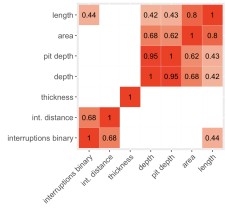
Comment (2) It was surprising that no other anatomical feature of the pOTS (like sulcal depth) predicted reading skills. I would have expected these to be quite closely correlated with interruption distance that did predict reading. Do the authors have any thoughts as to why this might be?
We thank Reviewer 2 for this question. While it seems intuitive that gyral gaps would affect sulcal depth, this mostly depends on whether we consider these gaps to be part of the sulcus -which here we do not- and on how the depth measure is actually calculated. With a definition of the sulcus as exclusive of gyral gaps, sulcal interruptions affect sulcal depth profiles only locally around the interruptions, where the fundus has to emerge to the convex hull surface. Because we measure sulcal depth based on the depth of the 8% deepest vertices (using an approach adjusted from that of Madan, 2019, see Methods lines 845-852), our measure of sulcal depth is essentially unaffected by interruptions.
As a confirmation and for more details, we provide Author response image 1 for the correlation matrix between the various morphological measures under consideration. (Using the same conventions as other correlation matrices displayed in the article and supplements: only significant correlations are displayed, according to FDR-corrected p-values above the diagonal.)
Author response image 1.
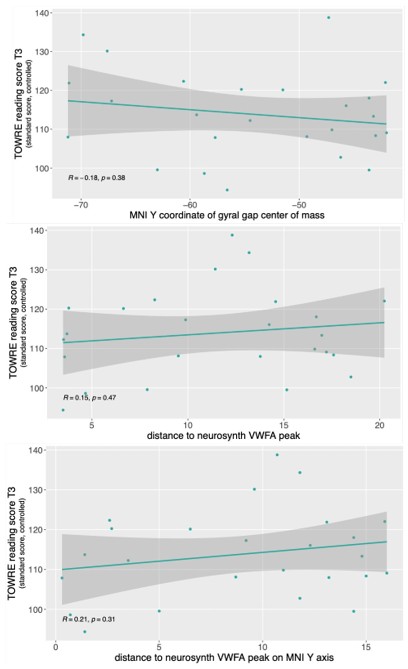
Comment (3) I hadn't quite appreciated on first reading the quite large variability in the location of the interruption (see Figure 4a, where three clusters seem to emerge). Nor did I appreciate that more than one interruption was often present (perhaps Figure 1 could be updated to show examples with more than one interruption). Some measures of distance along the OTS could be helpful and a possible comparison of the "types" based on location. I would have thought that proximity to the location of the VWFA might have meant a stronger effect. I presume this could be tested or discussed.
We entirely agree with Reviewer 2 that these are important questions. Unfortunately, it also appears that these cannot be reliably tested in our sample.
Specifically, while 25 children out of 43 had at least one interruption in the left pOTS, only 3 of those had two or more interruptions larger than 1mm each (or 6 children with two interruptions of any size). These incidence rates, combined with the fact that the locations of pOTS gaps do not distribute uniformly along the postero-anterior axis (Figure 4A), do not allow us to reliably assess in this sample either whether having more interruptions may confer an additional reading behavioral advantage, or whether interruptions in particular locations of the pOTS could be more beneficial than others.
We explored - for speculative purposes - whether a relationship may exist between reading scores and the location of left pOTS interruptions, taking the center of mass of the cortical gyral gap volumes as a coarse reference. We found no evidence for any relationship between reading and the locations of the left pOTS gap along the antero-posterior axis, nor between reading and the distance of the gap centroids to the VWFA (taking the Neurosynth reading meta-analysis peak coordinates, MNI -44 -58 -12), or between reading and the distance to the VWFA standard coordinates along the Y axis only (please see Author response image 2).
We choose not to report these analyses in the main text as they seem largely underpowered.
However, we added an example participant with two left pOTS interruptions in Figure 1 as suggested, and now added reference to these important questions in the Discussion, for future studies to address (lines 596-600):
“Such large-N approaches are needed to answer a number of outstanding questions, such as, in our case, whether there is an additional behavioral reading benefit to having two or more left pOTS interruptions - since these were too infrequent in our sample -, or whether gyral gaps placed in specific locations along the left pOTS may be optimal to for facilitating reading acquisition.”
Author response image 2.
Comment (4) It wasn't clear to me how the analysis of the diffusion data proceeded in the case of more than one interruption - it appears that each one was measured but this could be clarified. Is the location of relevance to the findings?
Regarding diffusion analyses, the diffusion tensor analysis averaged values across all pOTS interruptions together in the few children who had several. The tractography analysis used the full pOTS and all its interruptions, if present, together as a seed volume.
The precise location of the gyral gaps would indeed be very relevant to the tractography findings as one expects the gyral gaps to relate in a local fashion to the neuroanatomy of the underlying white matter. However, using the whole pOTS with its gaps as a seed seemed to us the only reasonable way to investigate the white-matter correlates of the effect of gyral gaps on reading at a group level, given (i) the large variability in gap location among the 15 of children with interruptions and diffusion data, (ii) the fact some children had multiple gaps, and most crucially (iii) the need to find a common ground for comparison with the group with no left pOTS interruption (continuous sulcus). The fact that our analyses average along the whole pOTS and across children with different pOTS gap locations likely washes away some of this neuroanatomical specificity, thus reducing the strength of any expected effect.
Comment (5) The authors could include a discussion of the sample's characteristics. They are not necessarily representative given the high SES and the average PIQ being more than 1SD above the mean.
We thank Reviewer 2 for pointing out this limitation we had overseen.
High-SES and high-functioning population samples indeed constitute a common bias in pediatric research samples, since study participation requires parents to have the time, interest and access to necessary information. This bias was likely increased here by the fact the data was acquired at Stanford University, in a very privileged area (Palo Alto, CA). The median performance IQ was indeed about one standard deviation above the population mean. Moreover, our sample is enriched for family history of dyslexia. We agree with the reviewer that this limits the generalizability of our results.
Yet, we replicate the association between left pOTS interruption and reading skills observed by Cachia and colleagues (2018) in a sample where half of the participants were from a rural and (very) low socioeconomic background (so that they would match a sample of illiterate adults), and with limited higher education. This suggests that, overall, such associations may generalize across extremely varied socioeconomic backgrounds and also possibly along the spectrum of general cognitive skills.
Since our reviewed preprint came out, two other studies further replicated associations between the left pOTS and reading skills (Cachia et al., 2025; Yao et al., 2026), in populations of different ages, countries and across the reading spectrum, including many children with dyslexia (Yao et al., 2026). While SES and cognitive skills are not systematically reported in those studies, one could assume that these studies and ours pooled together would be more representative.
Accordingly, we added this paragraph to the discussion (lines 548-562):
“Our study further extends previous results by Borst, Cachia and colleagues (2016; 2018) to a population of children with above-average cognitive and reading scores, from relatively high-SES families, and enriched for family history of dyslexia (cf. Table 1) - although no child met criteria for dyslexia by T3. While our sample is not representative of the general population, thereby limiting the direct generalizability of our results, half of the adult sample from Cachia et al. (2018) came from low socio-economic and rural backgrounds (matched to a sample of illiterate adults), suggesting that the association between left pOTS interruption and reading skills is robust across socio-economic contexts. Since our reviewed preprint came out, the association between left pOTS interruption and reading was further replicated (Cachia et al., 2025; Yao et al., 2026), notably in a larger child sample along the full reading continuum and oversampling children with dyslexia (Yao et al., 2026). (Of note, the finding that pOTS morphology correlated in adults with reading fluency rather than accuracy (Cachia et al., 2025) may also explain one of two prior negative findings concerning the association between pOTS and reading (Del Mauro et al., 2022)). Thus, our results together with the extant literature overall underline a common effect of left pOTS interruption observed across the continuum of reading abilities, and possibly of cognitive abilities.”
Minor
Comment (6) Line 342-44: A visualisation of what is meant by superficial vs deep plis de passage would help.
While an illustration of deep vs. superficial plis de passage would greatly help in clarifying this distinction for the readers, we feel that providing such a visualization in our figures would be equally confusing, if not more, as it may prime readers to wrongfully assume that we differentiate between superficial and deep plis de passage in our own analyses. Instead, we have tried to further clarify the distinction between deep and superficial plis de passage in the text as follows (lines 418-424):
“Indeed, Bodin and colleagues (2021) showed that, in the superior temporal sulcus (STS), the presence of plis de passage was associated with a higher density of U-shaped fibers connecting adjacent gyri. Superficial plis de passage, i.e., complete sulcal interruptions with a gyral gap visible on the cortical surface, showed an even higher local connectivity advantage than deep plis de passage, the complete gyral gaps or partial interruptions with sulcal pinching which are buried within the depth of the sulcus. (Please note that in our study, we focus on superficial gyral gaps visible on the cortical surface only, and do not classify deep plis de passage.)”
Comment (7) Line 96 - replace "blindly from" with "without awareness of" or "while .... were concealed".
The text was edited accordingly (lines 102-103 and 781) - thank you.
“[...] the OTS and MFS were delineated manually in each hemisphere, without awareness of the reading scores [...] Sulcal labeling was conducted without awareness of the children’s reading scores [...]”
(8) Line 547 - it is my impression that the findings of morphological differences in dyslexia are quite mixed. This gives the impression that the studies reported are representative of quite a vast number of studies and I don't think that is the case. Perhaps a sentence here with some more scepticism or alluding to the diverse findings in dyslexia?
It was indeed not our intention here to simplify or summarize a broad literature on morphological differences in dyslexia, but rather to cite a few example results in support of the preceding assertion “various other aspects of early brain structure have been proposed to constrain the development of reading skills”.
We clarified this sentence as follows (lines 659-662):
“[L]ongitudinal studies following pre-reading children at familial risk of dyslexia showed for instance that the surface area of the left fusiform gyrus (Beelen et al., 2019) and patterns of grey matter volume around the VWFA (Skeide et al., 2016) could be predictive of future dyslexia diagnosis.”
Comment (9) Finally, there is quite a lot of supplemental information, some of which is very interesting. I would recommend that the authors check what could be usefully transferred to the main body of the article. eLife uses figures and figure supplements followed by Appendices and the authors might want to check this before deciding on the final version of record.
We thank Reviewer 2 again for this suggestion to improve our manuscript. We have chosen to move several figure panels for Supplementary Figure 5 to Figure 3, following this suggestion, and given that our previous explanations in the paragraph concerning reading predictors appeared confusing to both reviewers (cf. see Rev 2 recommendation comment (1) and rev 1 recommendation comment (4)).
While figure supplements seem handy for reading the article directly on the eLife website, we chose to stick with the more standard practice of one appendix or supplementary file gathering all the additional information, which seems more accommodating of different reading practices overall.
References for Response to Reviews:
Borst G, Cachia A, Tissier C, Ahr E, Simon G, Houdé O (2016) Early Cerebral Constraints on Reading Skills in School-Age Children: An MRI Study. Mind, Brain, and Education 10:47–54.
Cachia A, Dupont C, Palmis S, Menu I, Auzias G, Sein J, Coulon O, Longcamp M (2025) The sulcal patterns of the occipito-temporal and anterior cingulate cortices influence reading and writing in children and adults. Cereb Cortex 35:bhaf145.
Cachia A, Roell M, Mangin J-F, Sun ZY, Jobert A, Braga L, Houde O, Dehaene S, Borst G (2018) How interindividual differences in brain anatomy shape reading accuracy. Brain Structure and Function 223:701–712.
Del Mauro G, Del Maschio N, Abutalebi J (2022) The relationship between reading abilities and the left occipitotemporal sulcus: A dual perspective study. Brain and Language 235:105189.
Ferrer E, McArdle JJ, Shaywitz BA, Holahan JM, Marchione K, Shaywitz SE (2007) Longitudinal Models of Developmental Dynamics Between Reading and Cognition From Childhood to Adolescence. Developmental Psychology 43:1460–1473.
Peng P, Kievit RA (2020) The Development of Academic Achievement and Cognitive Abilities: A Bidirectional Perspective. Child Development Perspectives 14:15–20.
Reuter M, Schmansky NJ, Rosas HD, Fischl B (2012) Within-subject template estimation for unbiased longitudinal image analysis. NeuroImage 61:1402–1418.
Roell M, Bellon E, Polspoel B, Declercq M, De Smedt B (2022) Investigating the association between variability in sulcal pattern and academic achievement. Sci Rep 12:12323.
Ünal ZE, Greene NR, Lin X, Geary DC (2023) What Is the Source of the Correlation Between Reading and Mathematics Achievement? Two Meta-analytic Studies. Educ Psychol Rev 35:4.
Yao JK, Mitchell JL, Davison A, Yeatman JD (2026) Sulcal anatomy of ventral temporal cortex and reading development. :2026.04.06.716640 Available at: https://www.biorxiv.org/content/10.64898/2026.04.06.716640v1.


