eLife publishes research across all areas of biology and medicine, from researchers around the world.
In this collection, we highlight a selection of work by authors based in Japan, showcasing research that contributes to the global scientific community.
At eLife, our reviewers and editors are all working scientists in their field. They work collaboratively to provide reviews that help your research develop.
Our publishing model is designed to prioritise a faster, fairer and more transparent publishing experience.
If we review your work, you can be sure that it will be published alongside its reviews, eLife Assessment and any response you have to the reviews. All open access, to be read by the international community.
The eLife Assessment evaluates the quality of the work directly, enabling assessment based on its scientific content rather than the journal title.
You decide how much to revise your work, whether to resubmit it, or to declare it the Version of Record.
Our video explains more about the process of publishing with eLife.
If you’d like to know more about eLife:
日本からの研究特集
日本の研究機関に所属する科学者による研究を厳選して紹介。
eLifeは、世界中の研究者による生物学および医学の全分野にわたる研究を出版しています。
このコレクションでは、日本を拠点とする著者による研究論文を厳選し、グローバルな科学の進展に貢献する研究の数々を紹介します。
eLifeにおいては、査読者と編集者全員がそれぞれの分野で活躍する現役の研究者です。彼らが協力し、皆さまの研究の発展に役立つ査読を行います。
私たちの出版モデルは、より迅速で公平かつ透明性の高い出版体験を優先するよう設計されています。
投稿された論文を査読する場合、査読結果に加えて、eLife アセスメント(eLife による評価)や査読結果に対する著者の回答も公開することをお約束します。すべてオープンアクセスであるため、国際社会の皆さまにお読みいただけます。
eLife アセスメントは、研究の質を直接評価することで、学術誌名に依ることのない、科学的内容そのものに基づく評価を可能にするものです。
論文をどの程度改訂するか、改訂版を再投稿するかどうか、あるいはVersion of Record(最終公開版)とするかは、著者自身が決定できます。
eLifeの出版プロセスに関する詳細は、こちらの動画をご覧ください。
eLifeについてさらに詳しく知りたい場合:
本コレクションの論文は英語で掲載されています。
Collection
- Biochemistry and Chemical Biology
A DNA origami nanospring introduces a force-sensing technology that enables measurement of motor protein stall forces without optical trapping, detecting force changes in kinesin KIF1A and its disease-related mutants.
- Cell Biology
- Immunology and Inflammation
A holistic narrative describes how extracellular matrices regulate various aspects of the entire leukocyte journey from blood to inflamed tissue, and the subsequent functional impacts on leukocyte and tissue fates.
- Genetics and Genomics
- Physics of Living Systems
Conservation levels of gene expression abundance ratios are globally coordinated in cells, and cellular state changes under such biologically relevant stoichiometric constraints are readable as low-dimensional changes in Raman spectra.
- Evolutionary Biology
A comparative analysis of genome-wide seasonal gene expression dynamics across four forest tree species revealed that a shared 'molecular calendar' emerges in winter, constraining gene expression evolution and potentially limiting temporal niche partitioning and species divergence in seasonal environments.
- Neuroscience
Designer Receptors Exclusively Activated by Designer Drug (DREADD) expression in macaque brains peaks around 2 months after adeno-associated virus injection and remains stable for over a year before gradually declining.
- Cell Biology
Proteome-scale visual screening in budding yeast provides a functional catalog of plasma membrane repair proteins and reveals the coordinated cellular responses at the bud tip and the damage site.
- Microbiology and Infectious Disease
PriC provides a bypass mechanism for compromised helicase loading at the origin of the Escherichia coli chromosome, which ensures the robustness of the chromosome replication initiation.
- Developmental Biology
Investigation of Aquaporin water channels unveils water inflow and build-up of hydrostatic pressure in endothelial tip cells as a novel mechanism of endothelial cell migration and blood vessel formation.
- Neuroscience
Co-release of the functionally opposing fast neurotransmitters, glutamate and GABA, from distinct synaptic vesicles within the same supramammillary synaptic terminal modulates dentate granule cell firing in a frequency-dependent manner.
-
- Stem Cells and Regenerative Medicine
Adding suppressors of spontaneous differentiation enables precise control of human induced pluripotent stem cell (hiPSC) status in suspension culture conditions and leads to scalable and automated cell therapy using hiPSCs.
- Cell Biology
Bacterial outer membrane proteins are recognized by BamD at specific signals located in multiple β-strands at the C-terminus of these proteins, and this recognition is important for efficient outer membrane protein assembly and maintaining the integrity of outer membrane.
- Plant Biology
Oxidative modification of Tryptophan residues in the reaction center protein D1 may be a key to drive the Photosystem II repair, likely enhancing accessibility of FtsH protease to D1.
- Ecology
Wind and ocean wave conditions experienced by albatrosses were estimated using an animal-borne recorder and revealed that take-off was easier under higher wave conditions.
- Cell Biology
HaloTag becomes resistant to lysosomal proteolysis upon ligand binding, enabling us to measure various types of autophagic flux easily and precisely by using HaloTag-containing reporters for processing assays.
- Computational and Systems Biology
- Neuroscience
A deep learning-based pipeline was developed for extracting cellular signals flexibly from moving cells in 3D time lapse images, and it outperformed previous methods under different imaging conditions.
- Microbiology and Infectious Disease
The host transmembrane protein MARCH8, previously known as an expression regulator of host proteins, is a powerful antiviral host factor with a potentially broad antiviral spectrum through two different mechanisms.
- Biochemistry and Chemical Biology
- Evolutionary Biology
In an in vitro RNA replication system, an RNA spontaneously diversifies and continuously evolves through coevolution with parasitic entities.
- Biochemistry and Chemical Biology
- Cell Biology
AirID provides highly interaction-dependent biotinylation for analysis of protein–protein interaction.
- Biochemistry and Chemical Biology
(O-Acyl)-ω-hydroxy fatty acids and their derivatives, produced by the fatty acid ω-hydroxylase Cyp4f39, form a lipid polarity gradient in the lipid layer of the tear film and prevent dry eye.
- Cell Biology
An intelligent method is developed to morphologically classify platelet aggregates by agonist type, which potentially opens a window on novel clinical diagnostics and therapeutics of thrombotic disorders.
- Chromosomes and Gene Expression
- Genetics and Genomics
A novel synthetic DNA cassette of CTCF-binding sites combined with the drug-controllable induction system of heterochromatin enabled switchable blocking of chromatin conformation and gene-enhancer interaction.
- Neuroscience
A cell-cell contact between microglial SIRPα and CD47 on neighboring cells is a critical module for phase conversion of microglia in the brain white matter and controls demyelination.
- Ecology
- Evolutionary Biology
UV-reflective dragonfly wax is shown to consist of very long-chain methyl ketones and aldehydes, and a synthetic dragonfly wax spontaneously forms light-scattering fine structures with strong UV reflection.
- Neuroscience
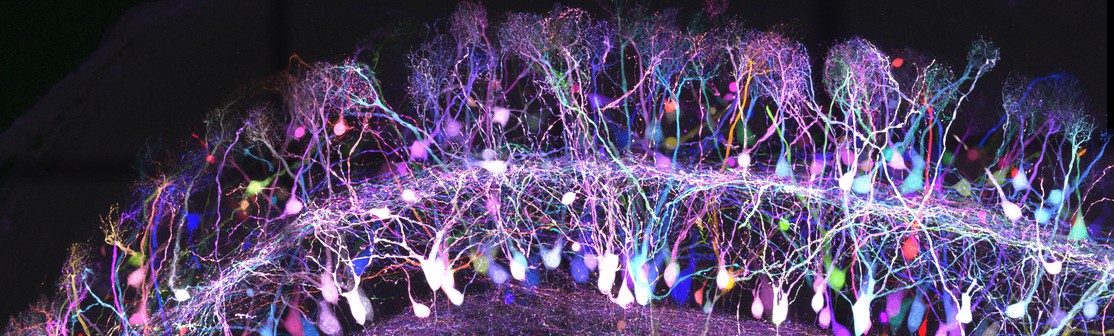
A bright and stochastic multicolor labeling method, Tetbow, facilitates millimeters-scale reconstructions of neuronal circuits at a large scale using tissue clearing.
- Immunology and Inflammation
Impairment of the autocrine S1PR1-Gi signaling on HEVs results in high-endothelial cell apoptosis, reduced CCL21-secretion from HEVs, and cessation of HEV-DC interactions and lymphocyte immigration across the high-endothelial barrier.
- Biochemistry and Chemical Biology
- Cell Biology
Cell-based high-throughput screening identifies IBT21 as a chemical chaperone, that inhibits ER protein aggregation and prevents the cell death caused by a proteotoxin, the aggregation-prone prion protein.
- Physics of Living Systems
A cell-sized fully confined space significantly controls the emergence and stability of a protein wave, resulting in intracellular spatiotemporal regulation driven by a reaction-diffusion mechanism.
- Cell Biology
- Evolutionary Biology
Oocyte maturation and ovulation in the sister group of vertebrates, Ciona intestinalis Type A, are triggered by Ci-VP, the Ciona homolog of a typical neruopeptide, vasopressin.
- Cell Biology
- Plant Biology
Lagging chromosomes in anaphase inhibits cytokinesis in plant cells.
- Computational and Systems Biology
- Structural Biology and Molecular Biophysics
A general machine learning scheme for integrating time-series data from single-molecule experiments and molecular dynamics simulations is proposed and successfully demonstrated for the folding dynamics of the WW domain.
- Ecology
- Neuroscience
Medaka fish were able to use faces for individual recognition, and were slower to recognise inverted faces but not inverted non-face shapes.
- Developmental Biology
Type XVII collagen, a transmembranous protein in basal keratinocytes, suppresses interfollicular epidermal proliferation in neonatal and aged skin, and helps rejuvenate epidermis.